6 Best CRM Software with AI Features for Small Business (2026)

A CRM's job is to keep track of every customer and lead so nothing falls through the cracks — but manually logging calls, scoring leads, and writing follow-up emails defeats the purpose if it eats up all the time the tool was supposed to save. AI features in modern CRMs are increasingly focused on removing exactly that manual overhead.
Why AI Features Matter in a Modern CRM
A CRM's job is to keep track of every customer and lead so nothing falls through the cracks — but manually logging calls, scoring leads, and writing follow-up emails defeats the purpose if it eats up all the time the tool was supposed to save. AI features in modern CRMs are increasingly focused on removing exactly that manual overhead.
The 6 Best AI-Powered CRMs
HubSpot CRM — Best Overall
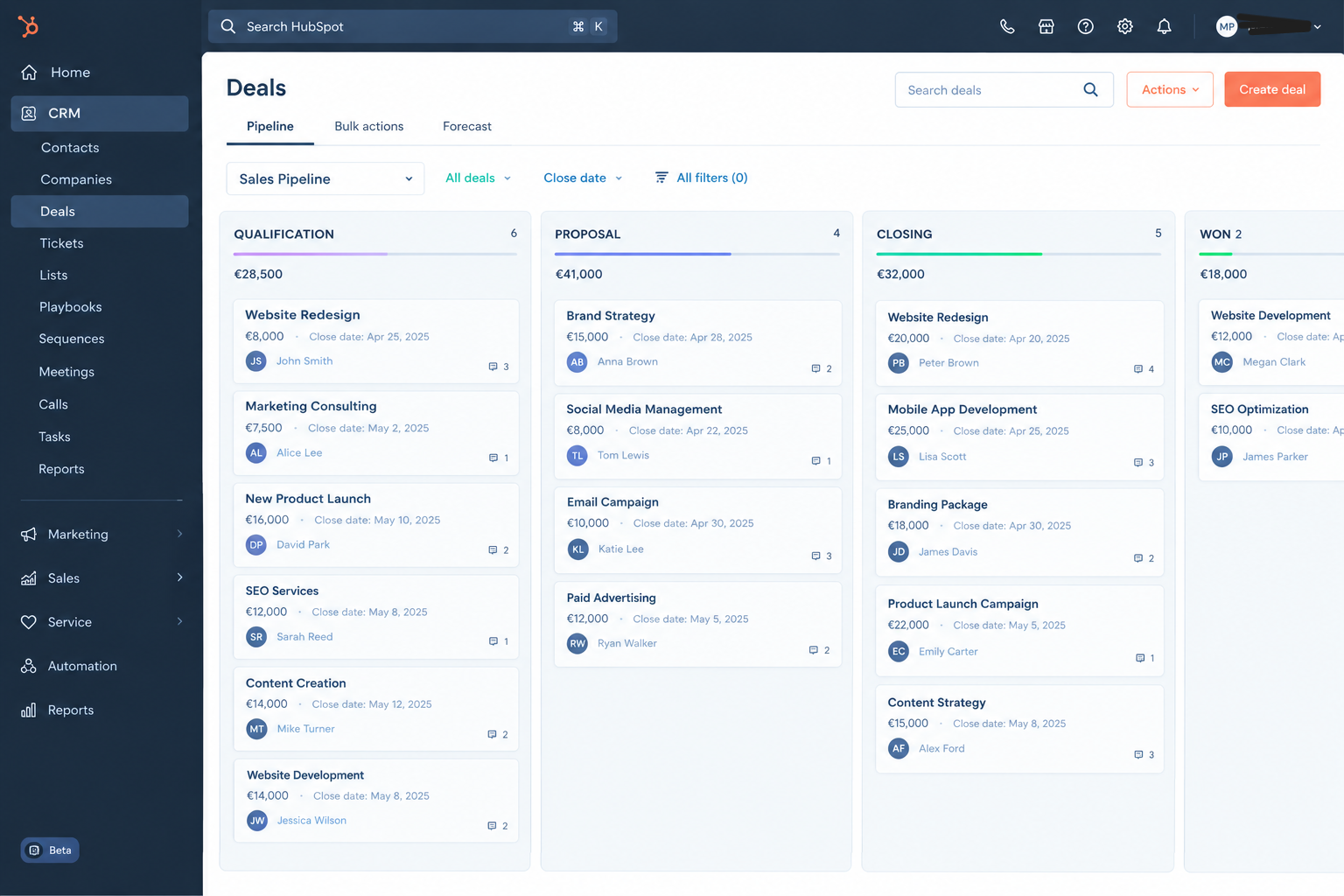
HubSpot's free CRM tier is genuinely usable for small teams, and its AI features — including automated data entry from emails and calls, predictive lead scoring, and AI-drafted follow-up emails — scale up meaningfully as you move into paid tiers. The breadth of HubSpot's ecosystem (marketing, sales, and service hubs all sharing the same data) makes it a strong long-term choice, though costs rise quickly once you need advanced features across multiple hubs.
Salesforce Starter — Best for Future Scalability
Salesforce's Starter plan brings a simplified, small-business-friendly version of the world's most widely used enterprise CRM, including AI-assisted lead scoring and next-step recommendations. It's the right choice if you anticipate significant growth and want a CRM that won't need replacing as you scale into a larger sales team, though the interface still carries some of the complexity of its enterprise roots.
Screenshot pendiente: Salesforce Starter
Captura de pantalla pendiente
Pipedrive — Best for Sales-Focused Teams
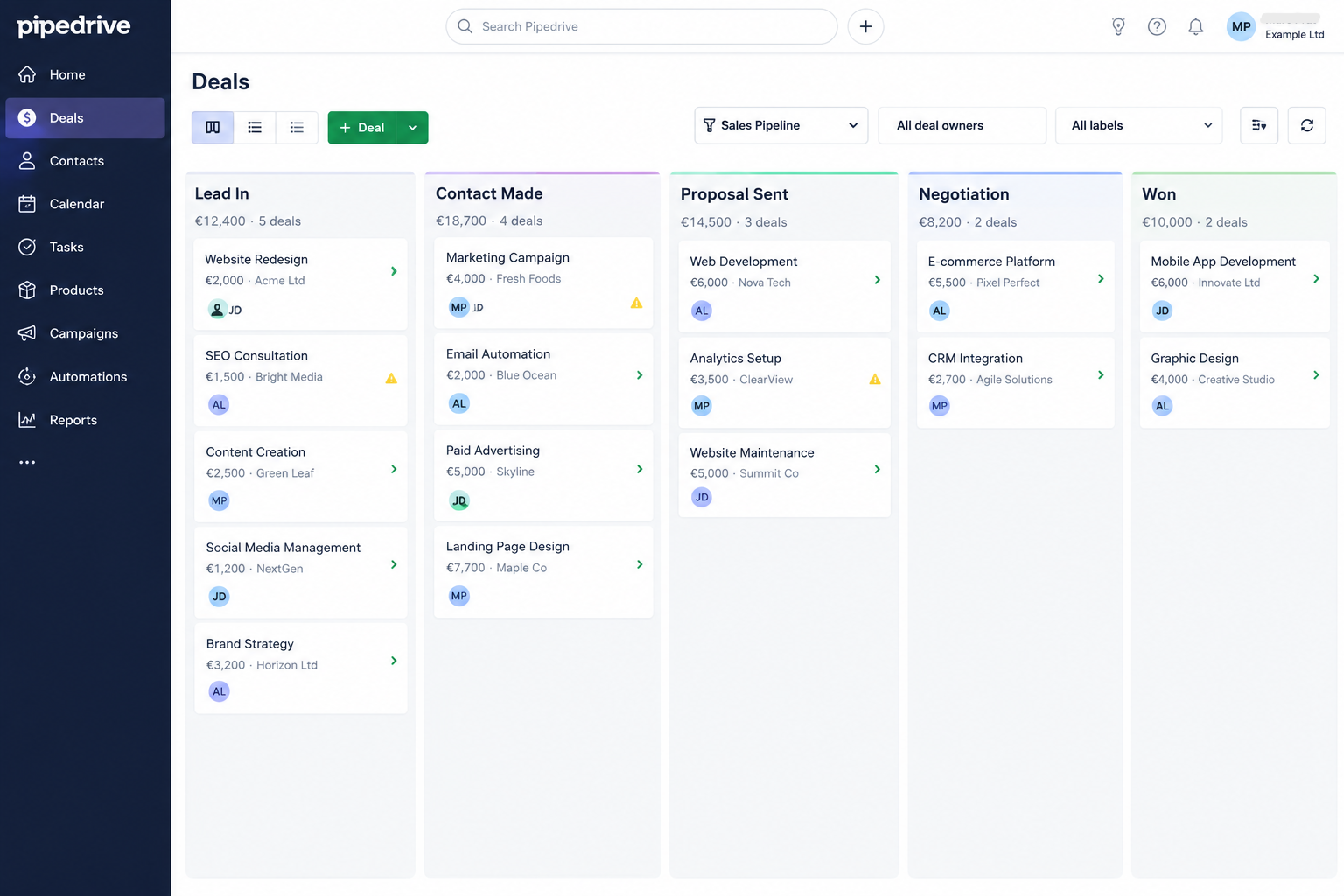
Pipedrive is built specifically around visual sales pipelines rather than broader marketing or service functionality, and its AI sales assistant flags deals at risk of stalling and suggests next actions based on patterns from your own historical data. For a small business where the CRM's only job is helping salespeople close deals, Pipedrive's focus is an advantage over broader, more complex platforms.
Zoho CRM — Best Budget Pick
Zoho's AI assistant, Zia, handles lead scoring, anomaly detection in sales data, and predictive analytics at a price point well below HubSpot or Salesforce equivalents. The interface feels less polished, and the AI features are less refined than the pricier competitors, but for cost-conscious small businesses, Zoho covers the core automation use cases at a fraction of the cost.
Freshsales — Best for Built-In Phone/Email
Freshsales bundles built-in phone and email functionality directly into the CRM, with AI-based lead scoring and deal insights, reducing the need for separate calling or email tools. It's a strong option for small sales teams wanting one unified tool rather than stitching together a CRM with separate communication software.
Close — Best for High-Volume Outbound Sales
Close is purpose-built for teams making a high volume of outbound calls and emails, with built-in calling, AI-suggested talk tracks, and workflow automation aimed specifically at outbound sales motion rather than inbound lead management. It's a poor fit for a business primarily handling inbound leads, but strong for outbound-heavy small sales teams.
What AI Actually Automates in a CRM
Across these tools, the AI features that provide the most real time savings are automatic activity logging (so reps aren't manually typing notes after every call), lead scoring based on engagement patterns, and AI-drafted (not fully autonomous) follow-up email suggestions that a human still reviews before sending. Features like fully autonomous deal-closing AI remain more marketing promise than reliable reality across every platform we reviewed.
Frequently Asked Questions
Is a free CRM plan ever good enough?
HubSpot's and Zoho's free tiers are usable for very small teams with basic needs, but AI features are typically gated behind paid tiers.
Which CRM is easiest to migrate data into?
Most of these tools offer CSV import and, for the major platforms, direct migration tools from competitors — HubSpot and Zoho both have straightforward import wizards.
Do I need a CRM if I only have a handful of customers?
Once you have more leads or customers than you can reliably track in a spreadsheet or your memory, a CRM — even a free one — starts paying for itself in fewer missed follow-ups.